


Amazon is one of the largest ecommerce marketplaces in the world. With so many sellers competing for attention, implementing the right online marketing strategies to drive traffic, increase sales on Amazon, as well as knowing how to generate more income for your business is a critical and challenging task.
Leveraging the two major sources of traffic, internal and external, is a powerful way to increase sales on Amazon.
The primary source of traffic for most Amazon sellers is internal. Internal traffic comes from within the Amazon channel. It means the traffic you get when customers search for your product on Amazon search engines. You could build internal traffic by optimizing for search results, through product reviews, or by using Amazon Sponsored Ads.
External traffic comes from sources outside the Amazon ecosystem. Getting external traffic means meeting your potential customers where they are. These customers may not be actively in search of your product. Some of these external sources include social media, email, online ads, and so on.
Both internal and external traffic sources are powerful growth levers that can increase sales on Amazon and help you know how to generate more income for your business.
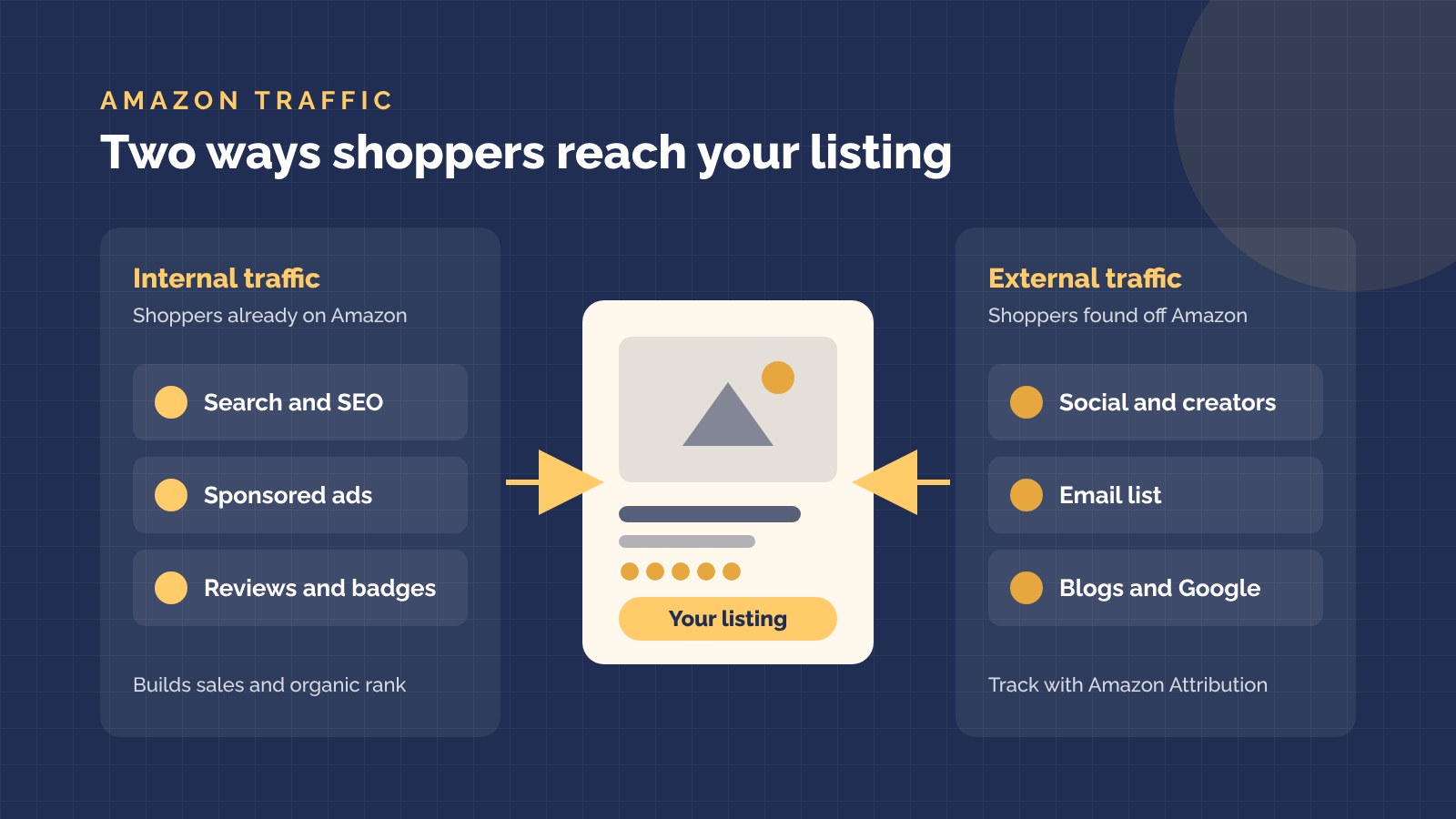
Read on to discover 5 effective online marketing strategies that will help drive internal and external traffic to your Amazon store.
Why drive traffic to your Amazon store?
Amazon houses millions of sellers and shoppers worldwide. Driving both internal and external traffic to your Amazon store can help you stand out of the crowd and keep you ahead of the competition.
Here are a few reasons your Amazon store needs to be getting traffic:
Increase sales on Amazon
Perhaps the most important reason for driving traffic to your store is to increase sales. A boost in sales will ultimately grow your Amazon business.
By utilizing external traffic sources like social media and emails, you can reach new audiences who may not be searching for your product. On the other hand, optimizing your product listings on Amazon can increase visibility and boost organic search on Amazon. By effectively implementing online strategies, you can boost internal and external traffic and increase sales on Amazon.
Boosts organic rankings
Driving traffic to your Amazon store can boost organic rankings. One determining factor for ranking on Amazon is sales velocity. The faster people buy your product, the more Amazon recognizes it as popular and gives it more visibility on search results.
If you are just launching a product, effectively driving both internal and external traffic can give your product the boost it needs to rank on search engines.
Stand out from the competition
The average Amazon seller generates traffic internally. To do that, the first place to start is by optimizing your product listings. But think about it. Every Amazon seller (certainly every successful one) is generating internal traffic by optimizing product listings. So how do you stand out?
This is where online marketing strategies that generate external traffic come in. To get your Amazon store in front of potential customers, you will need to utilize external traffic sources to increase traffic and drive sales.
How Amazon decides which listings get traffic
Amazon does not publish exactly how its search ranks products, but two things clearly matter: relevance and performance. Relevance is how well your title, bullet points, description, and backend search terms match what a shopper types. Performance is how shoppers respond to your listing: clicks, conversion rate, sales, and reviews. Improving either one brings more organic traffic, and a listing that converts well tends to keep its visibility.
Online marketing strategies to drive traffic to your Amazon store
To run a successful Amazon store that increases sales and online business revenue, you will need an effective combination of online marketing strategies that drive traffic from the inside and the outside.
Here are 5 online marketing strategies that will help you drive traffic and increase sales on Amazon.
- SEO optimization
- Sponsored Amazon Ads
- Social media marketing
- Build an email list
- Affiliate blogs
SEO Optimization
SEO optimization holds a major place in boosting organic search rankings both on Amazon search engines and on other search engines off Amazon. This is how potential buyers find you.
Using the right content and keywords is vital and helps increase traffic and ultimately increases sales on Amazon.
Here are a few strategies to help you optimize your product listings:
Eye-catching, optimized title
Think of a title that grabs your audience’s attention yet contains the main keywords your audience is looking for. A catchy and optimized title gives your listing what it needs to be noticed in search. Follow Amazon's title rules: most categories allow up to 200 characters.
Quality product images
After reeling your potential customer in with a catchy title, you want to make sure they get a good look at your product. To stand out, ensure your product images communicate the value your product gives. For example, if you sell running shoes, consider an image that shows customers what they look like while in motion. Be sure to follow Amazon’s guidelines, including presenting products against a white background where required.
Clear and concise bullet point list
After looking at your product image, customers want to look out for major features and benefits of the product. Ensure all the facts that customers need to know about the product are stated clearly in bullet points. If points are not clear, customers could lose interest altogether.
Catchy product description
Poor copywriting can leave your customers a bit skeptical about purchasing your product. Communicate your unique selling point in the most interesting way, that propels your customer to make a buying decision.
Backend search terms
Fill in the backend search terms field with relevant keywords that don't fit naturally in your title or bullets. Amazon limits this field to under 250 bytes, and if you go over the limit it ignores the whole field.
Amazon Sponsored Ads
SEO optimization boosts organic search but even this doesn't guarantee that your product listings will appear on Amazon’s top search result. SEO is just one of the many ranking factors.
To gain better control of your product’s visibility, you can utilize Amazon’s sponsored ads. You can simply pay to get your products seen by customers who search for your products on Amazon. Depending on the type of sponsored Amazon ad, your products could also get seen by customers through third-party apps and websites. It is important to note that Amazon has an increasing array of advertising options which can differ depending on whether you are a brand or third-party seller. Sponsored Products is usually the fastest way to get immediate visibility while your organic ranking builds. See our Amazon advertising guide for the full list of ad types.
A few tips for running effective Amazon sponsored ads:
Use Sponsored Brands
Sponsored Brands ads are a great way to increase brand awareness. These ads appear on search results and can be helpful when promoting multiple products. You can add your logo and a custom headline to help you stand out. Sponsored Brands require enrollment in Amazon Brand Registry.
Check for product profitability
Before running a sponsored ad on Amazon, check for products that have the highest profit margins. This will help you avoid wasting money on low-selling items and increase your online business revenue.
Define your target audience
This is the bedrock of your Ad campaign. Defining your audience will help you select the right keywords they are searching for. It will also help you know what product you need to promote and the type of ad that will increase conversion rates.
Use the placement report
This is an extensive report that helps you analyze and monitor your ads. With this report, you can look at keyword performance among other metrics, tweak your ad campaigns and ensure you're getting the best possible results from your ads.
Social media marketing
A solid social media strategy that targets the right social media platform and audience can get you tons of visibility and drive traffic to your Amazon store. You can take advantage of social media platforms like Instagram, YouTube, TikTok, Pinterest, and many others to increase brand awareness and connect with new and existing customers.
You can get your products seen by thousands of new customers who may not have been in search of your product. Through social media, you can share helpful videos that communicate the value of your product and share a link that directs your customers back to your Amazon store.
The best channel depends on your product and audience. Pinterest works well for home, lifestyle, and craft products. TikTok and Instagram suit visual products and brands with a strong visual identity. YouTube is especially effective for products that benefit from a demonstration.
Creators can help too. Micro-influencers with focused audiences often convert better than bigger accounts with broad appeal, and the Amazon Influencer Program lets creators earn commissions on products they recommend. See our guide on how to leverage Amazon influencers.
Build an email list
An email list is a valuable asset for any business. With an email list, you can build a relationship with your customers, market your products and promote special deals and offers. There are different ways to build an email list. You can host webinars that let attendees sign up with their email. You can also share educational resources like an ebook or an audio guide in exchange for individuals providing you with their email. The key strategy to note here is that you need to give away something of value in exchange for your audiences’ email address, which is something of great value to you.
Affiliate blogs
Taking advantage of affiliate blog sites is a great way to drive traffic to your Amazon store. There are several Amazon affiliate blog sites that include links to Amazon listings and get a commission when someone clicks and buys a product on Amazon. You can reach out to these blog sites and request to feature your product on their blog. For example, if you sell vegan running shoes, you might want to reach out to niche blog sites that compare lists of “best vegan running shoes”.
If you get a popular blog to feature your listing, you could pull traffic to your Amazon store.
How to track external traffic with Amazon Attribution
Amazon Attribution gives you tracking tags for your off-Amazon campaigns (social, email, search ads, blogs) so you can see the clicks, detail page views, and sales each one drives. You access it through an Amazon Ads account.
If your brand is enrolled in Amazon Brand Registry, the Brand Referral Bonus program also pays you a bonus, averaging 10% of qualifying sales, when your non-Amazon marketing sends shoppers who buy. The bonus is credited against future referral fees, and the exact rate varies by category and price.
How to know if your traffic strategy is working
Watch sessions, unit session percentage (your conversion rate), and sales rank in your Business Reports in Seller Central. For PPC, track impressions, clicks, and ACOS. For external traffic, use Amazon Attribution for campaign-level data. Rising organic rank on your target keywords is a strong sign that your traffic and conversion strategy is working.
Final thoughts
With the right online marketing strategies, you can drive traffic to your Amazon store, increase sales on Amazon and generate more income for your business. To minimize experimentation, reduce costs, and drive traffic to your store using the best online marketing strategies, you can simply contact ePlaybooks.

